

Why the need for this article?
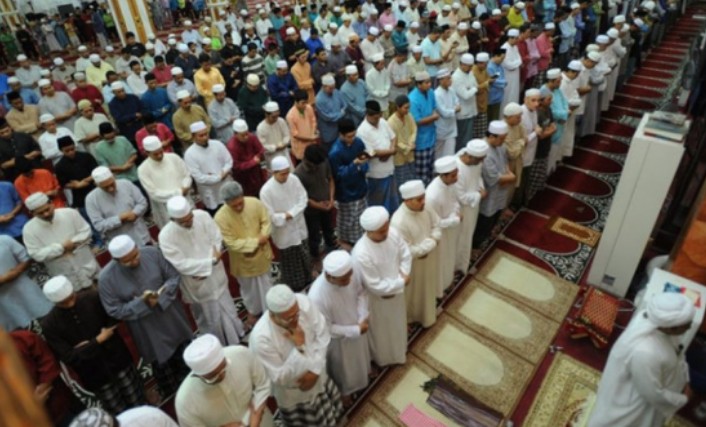
Alhamdu lillah, the masajids are full and bustling every Friday for the Jumua’ prayers. In fact, many masajids in the UK have to arrange for a second jama’at as the limited space cannot cover for all the people in one round. During school holidays, some masajids even resort to third jama’ats.
In many Islamic countries Friday is a non-working day for people, however, it is usually a working day in the UK and most western countries. Therefore, time is limited, people need to finish prayers quickly in order to attend work, education or other important appointments. Masajids and imams are aware of this – they try to be mindful, usually do not lengthen the prayer, start on time and finish promptly.
It is important for Muslims particularly, younger generation to know and have the correct attitude and intention for Friday in order to get the maximum out of it. It should be a mindful and conscientious intention and effort for Friday as it is the best day of the week.
Virtues of Friday
Abu Huraira reported the Messenger of Allah (ﷺ) as saying: The best day on which the sun has risen is Friday; on it Adam was created. on it he was made to enter Paradise, on it he was expelled from it. And the last hour will take place on no day other than Friday (Sahih Muslim, https://sunnah.com/muslim:854b )
In other ahadith, “Indeed, there is an hour on Friday during which no Muslim asks Allah for good but that He gives it to him.” (Muslim 852e)
“We are the last, but we will be the foremost on the Day of Resurrection, though they were given the Scriptures before us. This is their day (Friday) which was prescribed for them, but they differed about it. So Allah guided us, and the people follow us in this regard: the Jewish community tomorrow (Saturday) and the Christian community the day after tomorrow (Sunday)”. [Bukhari 876]
“There is no creature on earth that does not become attentive on Friday, listening intently, until the sun rises, fearing the coming of the Hour, except for the son of Adam.” [Sunan an-Nasa’i 1430, Grade: Sahih]
Allah (swt) mentions in the Qur’an, “O ye who believe! When the call is proclaimed to prayer on Friday (the Day of Assembly), hasten earnestly to the Remembrance of Allah, and leave off business (and traffic): That is best for you if ye but knew!” (62.9)
Abu Hurairah (may Allah be pleased with him) reported that the Prophet (peace and blessings be upon him) said:
“The five [daily prescribed] Prayers, and Friday [prayer] to the [next] Friday [prayer], and Ramadan to the next Ramadan, is expiation of the sins committed in between them, so long as major sins are avoided.” (Muslim)
Friday is a time a reflect and renew our imaan. “Whoever neglects three Jumu`ahs (in a row) out of negligence will have a seal placed upon his heart.” (Abu Dawud 1052, at-Tirmidhi 500, an-Nasai 1369)
Adab for Jumua’
“Whoever purifies himself with ablution in his house, then he walks to a house among the houses of Allah to fulfill an obligation among the obligations of Allah, one step of his will expiate his sins and another step will raise his status.” (Sahih Muslim)
Rukanah (Allah be pleased with him) says, I heard the Messenger of Allah (Sallallahu Alayhi Wasallam) say: “The difference between us and the polytheists is, wearing the turban over the hat” (Sunan Abu Dawud, 4075 & Sunan Tirmizi, 3919)
Arriving early for Jumua’ is beneficial. “Whoever purifies himself with ablution in his house, then he walks to a house among the houses of Allah to fulfill an obligation among the obligations of Allah, one step of his will expiate his sins and another step will raise his status.” (Sahih Muslim)
On praying bearheaded (without a Turban or Kufi)
Shaikh Albaani (May Allaah’s mercy be on him):
(From Al-Qawl Al-mubin fi akhta’ Al-musallin by Mashhur Hussain on page # 58 of the 2nd edition):
“Praying bareheaded is makruh (disliked).
It is not established at all that the Messenger (sallallaahu ‘alaihi wa sallam) ever prayed outside the pilgrimage with bare head, without a turban/cap. Whoever thinks he did so then he should bring the proof. If he (sallallaahu ‘alaihi wa sallam) had done so, it would have been recorded. The narration attributed to Ibn ‘Abbaas that the Prophet (sallAllaahu ‘alayhi wa sallam) would sometimes remove his cap and place it as a sutrah in front of him is weak (da’eef).
Shaikh Albaani (May Allaah’s mercy be on him) (Al-Din al-khalis (3:214) and al-Ajwiba al-nafi’a ‘an al-masa’il al-waqi’a (p. 110):
“All acknowledge that it is desirable for the Muslim to enter prayer in the most perfect Islaamic appearance, due to the hadeeth: “Allaah is worthier of your self- adornment” [hasan]. And it is not part of excellent attire in the custom of the Salaf to habitually bare one’s head, and walk in that guise on the road and when entering places of worship. Rather, it is a foreign custom which infiltrated many Islaamic countries at the time the disbelievers invaded them and brought their habits with them. The Muslims began to imitate them in this, and they lost thereby their Islaamic personality as well as through other similar acts… Nor is it established that the Prophet ever prayed bareheaded and without a turban other than in the state of ihram, although there were plenty of occasions to report it if he did. Therefore, whoever claims that he did, let him produce the proof, for truth is more deserving to be followed.”
Shaikh Albani (May Allaah’s mercy be on him) goes on to explain the mistake of some brothers in Egypt who brought the proof of the permissibility to pray without covering the head by analogizing with how the head is uncovered for someone in ihraam during the pilgrimage.
“This is wrong since not covering the head during the pilgrimage is from the law (Sharee’ah) of Allaah. If their analogy was right then they should make it compulsory to pray without any head covering at all since it is obligatory to do so during the pilgrimage and to follow all the other restrictions of Ihraam in regular life!” [Tamaam-ul-Minnah fee ta’leeq ‘alaa fiqh-us- Sunnah by ‘Allaamah Albaani]
Listening to Khutbah
It was narrated from Abu Hurayrah that the Messenger of Allah (peace and blessings of Allah be upon him) said: “If you say to your companion, ‘Listen attentively’ on a Friday, when the imam is delivering the khutbah, then you have engaged in idle speech.”
“It is transmitted from the majority of the early Muslims from the Sahaba, including Umar, Uthman and Ali, and the Tabi’in that they did not deem it permissible to pray during the khutba. This was mentioned by Imam al-Nawawi in his commentary on Sahih Muslim quoting Qadi Iyad from his own commentary on Sahih Muslim, whilst Imam al-Nawawi only named al-Hasan al-Basri and others’ from the early Muslims as following the Shafi’i opinion. [al-Minhaj Sharh Sahih Muslim ibn al-Hajjaj, 6: 400. Dar al-Ma’rifa] In addition, not praying during the khutbah was the practice of the people of Madina [‘amal ahl al-Madina] which is a mutawatir practical transmission from the Sahaba to the Tabi’in of Madina to the Tabi’ al-Tabi’in upon which Imam Malik based his school.” (If we enter the masjid on Friday and the khutbah has already started, – IslamQA )
The distraction of mobile phones
Unfortunately, we see many people on mobile phones, scrolling happily along, even during when the Imam is delivering his khutbah. Some it appears, to come into the masjid, very late, scroll on phones, wait until the Imam stands up for prayer and then leave immediately after the prayer, without further prayers or duas. The flicker from their screens distract others, even when they do want focus on the khutbah. It sets a bad example for others and normalises the use of mobiles phones during khutbah. It also triggers others to instinctively look at their own mobiles. It may be better to leave the phones at home or to switch it off.
Dua after Jumua’
It is also narrated by Fadhl Bin Abbas (R.A) that the Prophet (S.A.S) said:
‘The Salaah is in twos and one must do a Tashahud in every two rakaats. He must adopt sincerity, humility and the state of submissiveness in Salaah. Then he must raise his hands to his Lord while turning the inside of his palms towards his face and say, ‘O my Lord, O my Lord….. Whoever does not do this, he is like such and such.’ The Prophet (S.A.S) used harsh words for one who did not do it.’ (Ahmad, Hadith No.1799).
